 BodyWision
Water transports nutrients, helps regulate body temperature and enables the removal of metabolic waste. The aim is to replace ongoing losses.
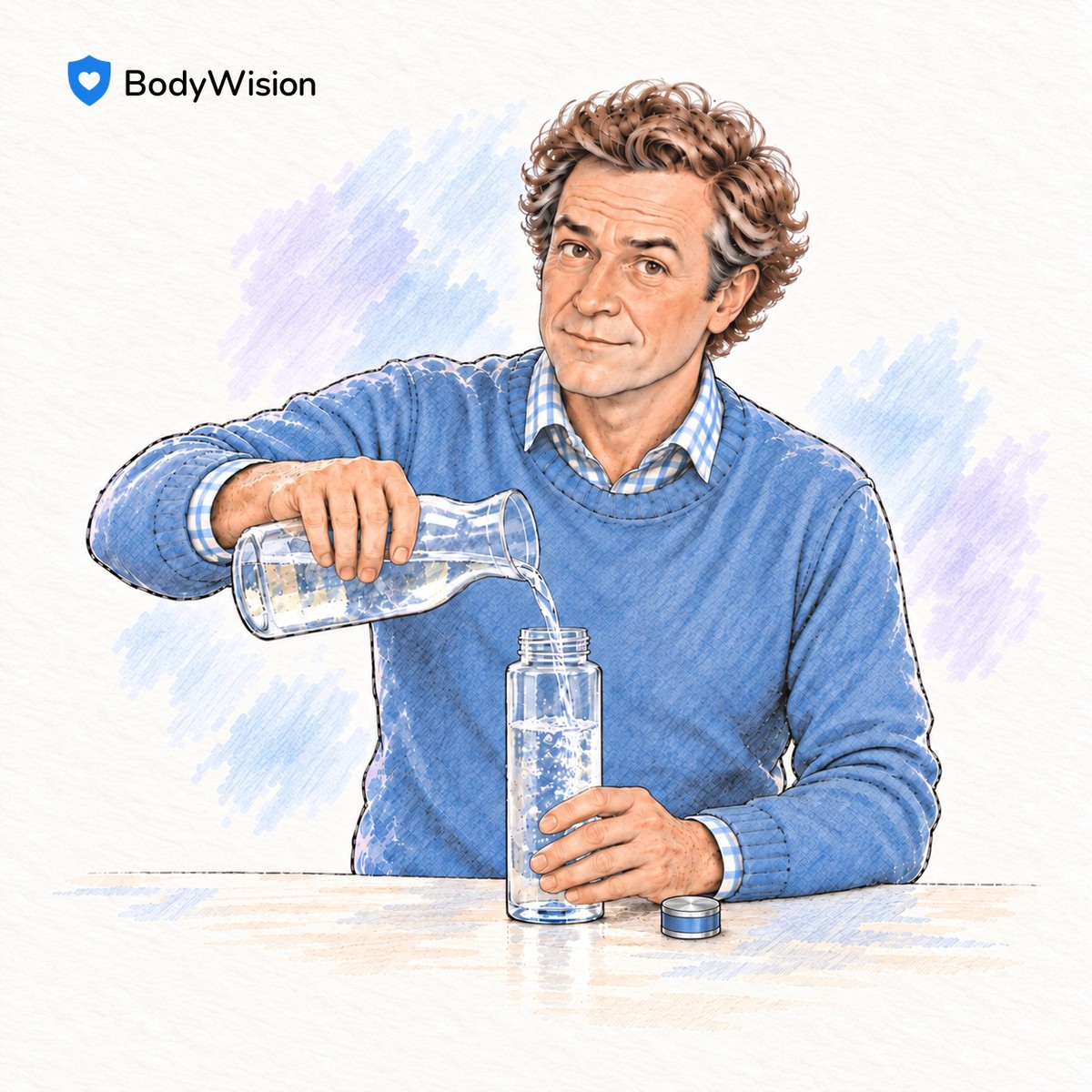
How much makes sense day to day?
One fixed volume will not suit every body. For healthy adults under average conditions, the DGE/ÖGE gives a rough guide of 30–35 millilitres of water per kilogram of body weight per day, depending on age – from drinks and food combined. That works out to about 1.5–1.75 litres at 50 kg and 2.4–2.8 litres at 80 kg. It does not all need to be drunk: fruit, vegetables, soups and other foods also provide water.
This calculation is only a rough guide: activity, heat, diet, age and health can change your needs. A simple formula is especially imprecise when body weight differs markedly from the average.
Do coffee and tea count?
Yes. Coffee and tea count towards fluid intake – including herbal and fruit teas. They do not need to be “balanced out” with an equal amount of water. Coffee and caffeinated teas are best consumed in moderation because of their caffeine content.
Still or sparkling water and unsweetened tea are good everyday choices. Sugary drinks provide fluid too, but often a substantial amount of sugar.
Exercise: The type of activity makes a difference
Sweating causes the body to lose water and electrolytes, particularly sodium. A gentle workout in cool weather is therefore not comparable to a long run in summer heat.
Water is usually sufficient for short, moderate sessions. During longer, intense exercise, sodium and carbohydrates may also be useful. Sports drinks are not necessary for every workout.
People who regularly do long endurance sessions can estimate fluid losses by weighing themselves before and after comparable sessions. Fluids consumed and any urine passed need to be taken into account. A sports medicine professional or qualified sports dietitian can help turn this information into a suitable drinking strategy.
Drinking as much as possible just in case is not a good strategy: Excessive fluid intake can dangerously dilute sodium in the blood. Even an electrolyte drink does not automatically make overdrinking safe.
When else do fluid needs change?
Heat and physical work: Extra sweat losses can also occur during gardening, physically demanding work or exposure to high indoor temperatures.
Pregnancy and breastfeeding: As a guide, EFSA suggests an additional total water intake of around 300 millilitres a day during pregnancy and around 700 millilitres while breastfeeding, compared with women who are not pregnant or breastfeeding. These amounts include water from both drinks and food.
Older age: The sensation of thirst may become weaker. Difficulties holding a drink, swallowing or accessing beverages can add to the problem. Regular opportunities to drink and easily accessible beverages can help.
Fever, diarrhoea or vomiting: Additional water losses can increase fluid needs. Diarrhoea and vomiting also cause salt losses, so an appropriate oral rehydration solution may be useful. The support needed depends on severity, duration and individual circumstances.
How useful are thirst and urine colour?
For healthy adults, thirst is a helpful everyday signal. Darker urine or urinating much less often may indicate low fluid intake. Pale yellow urine is often a practical guide – it does not have to be completely colourless.
Colour alone is not a reliable test, however: food, medicines and supplements can alter it. Headaches or tiredness do not prove dehydration either.
Marked dizziness or being unable to keep fluids down because of persistent vomiting calls for prompt medical advice. New confusion or pronounced drowsiness are urgent warning signs that require immediate medical help. Persistent excessive thirst should also be assessed by a clinician.
When fluid intake needs medical guidance
With some conditions, an adjusted fluid intake can be part of treatment or prevention:
- Recurrent kidney stones: Drinking enough fluid, mainly water, can help prevent further stones. Agree on a suitable amount with your healthcare professional, particularly if you have other health conditions.
- Heart failure: The body may retain fluid. Whether a restriction is useful and how much to drink depend on the individual's condition and treatment – not everyone needs the same limit.
- Severely impaired kidney function: If the kidneys cannot remove enough excess water, a fluid restriction may be needed. The amount is then set individually.
Do not change existing medical recommendations on your own.
Finding a drinking routine that works for you
A drinking routine does not have to be complicated: keep a drink in sight, have one with meals and plan ahead for exercise or hot weather. If you often forget to drink during the day, regular cues can help – such as a glass with breakfast or a drinking break in the afternoon.
The aim is not to reach a fixed number of litres every day. A routine that fits your daily life and individual needs is more useful. Thirst, physical activity and your surroundings provide guidance; any existing medical recommendations take priority.
Discover BodyWision
Your health information in one place.
Learn about BodyWision